
Why Modern Buyers Demand Turnkey
Why Modern Buyers Demand Turnkey
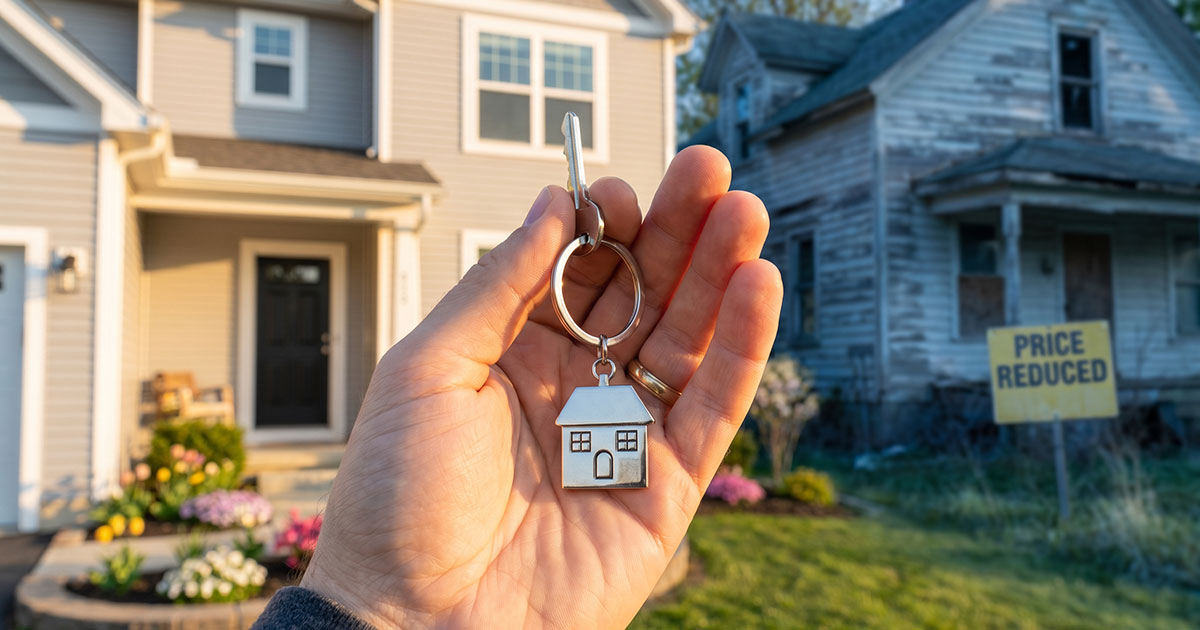
As US mortgage rates hover around a stubborn 6.5%, the housing market faces a profound shift in buyer psychology. With liquidity drained by high borrowing costs, modern home shoppers increasingly bypass fixer-uppers in favor of pristine, turnkey properties. This article explores why move-in ready homes command premiums while discounted, outdated listings languish on the market.
The New Mathematics of Modern Homeownership
The American real estate landscape operates under a starkly different financial reality than the ultra-low-rate era of the previous decade. With the 30-year fixed mortgage rate stubbornly anchored around the 6.5% threshold, the purchasing power of the average buyer has been severely compressed. Every percentage point increase in mortgage rates translates directly into hundreds of dollars added to the monthly housing obligation, forcing consumers to scrutinize every aspect of their upfront expenditures. In previous years, a homebuyer might have willingly purchased a slightly outdated property with the intention of remodeling it gradually over time, relying on cheap personal loans or home equity lines of credit. Today, however, the financial safety net that enabled such incremental renovations has largely evaporated due to high interest rates across all credit products. Consequently, the modern buyer enters the market with a hyper-focus on immediate affordability and predictable monthly cash flows, changing how properties must be presented to attract serious offers.
The Vanishing Capital Reservoir of Today’s Buyers
To understand why turn-key properties have become the gold standard, one must examine the depleted financial reserves of contemporary home shoppers. Accumulating a sufficient down payment and covering escalating closing costs in a high-price environment absorbs almost all available liquidity a household possesses. When a family allocates their entire life savings just to secure a mortgage at 6.5%, they are left with virtually zero financial cushion to tackle immediate post-sale renovations. A kitchen remodel or a roof replacement that might have cost fifteen thousand dollars a few years ago now carries a much higher price tag due to persistent inflation in construction materials and skilled labor. Financing these secondary projects through credit cards or contractor loans at double-digit interest rates is a financial non-starter for households already stretched to their budgetary limits. As a result, buyers actively retreat from properties that require additional capital investments, viewing any necessary repair not as an exciting customization opportunity, but as an immediate and unaffordable financial liability.
The Frictionless Appeal of Move-In Ready Homes
Properties that are marketed as genuinely move-in ready are experiencing an unprecedented surge in demand, frequently sparking competitive bidding wars even in a cooling national market. When a home features updated systems, modern appliances, fresh paint, and flawless flooring, it allows the buyer to roll the entirety of their housing cost into a single, predictable monthly mortgage payment. There is immense psychological and practical comfort in knowing that no further large outlays of cash will be required for the foreseeable future. Lenders are also more inclined to smoothly approve financing for homes that do not require structural or aesthetic overhauls, reducing the friction inherent in the underwriting process. This preference for turnkey real estate has created a highly bifurcated market where pristine homes sell within days at or above asking price, while neighboring properties that require even moderate cosmetic updates sit entirely neglected by the buying public.
The Real Cost of the Fixer-Upper Discount
Many sellers mistakenly believe that offering a modest price discount or a minor credit at closing will be enough to compensate for an outdated interior or an aging HVAC system. In the current economic climate, this strategy frequently fails because the typical discount offered rarely matches the actual psychological and financial burden of the work required. A ten-thousand-dollar price reduction does very little to comfort a buyer who knows they cannot afford the out-of-pocket cash to fix the underlying problem upon moving in. Furthermore, the logistical nightmare of managing contractors, securing municipal permits, and living through a dusty renovation process holds zero appeal for families already stressed by macroeconomic uncertainties. Properties requiring work accumulate significant days on market, which quickly attaches a stigma to the listing and eventually forces the seller into much deeper, agonizing price cuts than originally anticipated.
Strategic Renovations for the Conscientious Seller
For homeowners looking to list their property in this competitive environment, understanding this shift in buyer psychology is paramount to achieving a successful sale. Instead of listing a home in its raw, outdated condition and hoping for a patient buyer, sellers must proactively undertake strategic, high-impact improvements before hitting the market. Focusing on highly visible areas such as applying neutral coats of paint, replacing worn carpeting, upgrading old kitchen countertops, and ensuring absolute cleanliness can drastically alter a property’s perception. If major capital improvements like a roof replacement are genuinely unavoidable, sellers should consider paying for the work upfront or offering structured seller-buydowns that directly lower the buyer’s mortgage rate. By transforming the property into a zero-effort sanctuary, the seller effectively eliminates the buyer’s anxiety regarding post-closing expenses, unlocking a much larger pool of motivated and qualified prospects.
Adapting to the Realities of the Equilibrium Market
The prevailing real estate dynamics under a semi-permanent 6.5% mortgage rate environment underscore a broader stabilization across the United States housing market. As national price growth flattens and active inventory expands, buyers are utilizing their newfound leverage to demand perfection rather than rushed compromises. The premium today is placed squarely on convenience, certainty, and capital preservation, making the traditional fixer-upper a relic of an entirely different economic era. Sellers who recognize this trend and invest in preparing their homes to meet the rigid demands of turn-key buyers will consistently secure premium offers and rapid closings. Ultimately, navigating this market successfully requires both sides of the transaction to abandon old assumptions and embrace a landscape where move-in ready condition is no longer a luxury, but an absolute necessity for transactional success.
Barbara Simmons
Equity Center Real Estate
2945 Townsgate Rd Suite 200 Westlake Village, CA 91361
Email: barbara@aboutrealestate.com
Phone: (805) 390-7917
Barbara Simmons is a highly principled and successful real estate broker. Barbara created and owns Equity Center Real Estate, an independent firm located in Westlake Village, CA.
• Under her superior enterprise leadership and team-building ability her company registered 800,000,000 (eight hundred million) in sales volume since 1990 when the company was formed.
• Equity Center Real Estate operates in 14 counties predominately along the California coast from San Francisco to San Diego, Barbara’s significate expertise is her ability to execute sales of foreclosed properties known as REOs.
• In addition to Barbara’s daily practice of residential property sales she represents a public company, a large mortgage servicer as their Real Estate Broker in the State of California. In this role, she administers REO transactions with agents throughout the State of California.
• Under her superior enterprise leadership and team-building ability her company registered 800,000,000 (eight hundred million) in sales volume since 1990 when the company was formed.
• Equity Center Real Estate operates in 14 counties predominately along the California coast from San Francisco to San Diego, Barbara’s significate expertise is her ability to execute sales of foreclosed properties known as REOs.
• In addition to Barbara’s daily practice of residential property sales she represents a public company, a large mortgage servicer as their Real Estate Broker in the State of California. In this role, she administers REO transactions with agents throughout the State of California.
